
Claw or prong
Fine claws hold the stone securely while allowing light to enter from several angles. A classic choice for solitaire and statement settings.
Light and elegantDiamond setting
From a classic solitaire to detailed pavé work, every stone deserves a setting shaped with care, balance and exacting attention to detail.
The art of setting
The setting does more than hold a diamond in place. It influences the ring’s character, how light reaches the stone and how the piece feels in everyday wear. JRC considers the stone, design, metal and condition of the jewellery before recommending the right approach.
Setting styles
Fine claws hold the stone securely while allowing light to enter from several angles. A classic choice for solitaire and statement settings.
Light and elegantA smooth rim of metal surrounds the stone, creating a clean profile and offering excellent edge protection.
Modern and protectiveSmall stones are placed closely together to create a continuous surface of light with minimal visible metal.
Detailed brillianceStones are aligned between two metal walls for a smooth finish often used on bands and shoulder details.
Sleek and structuredA central stone is framed by smaller stones to add presence, detail and a distinctive outline.
Enhanced presenceAdjacent stones share fine prongs, reducing visible metal and creating a bright, continuous line of diamonds.
Refined sparkle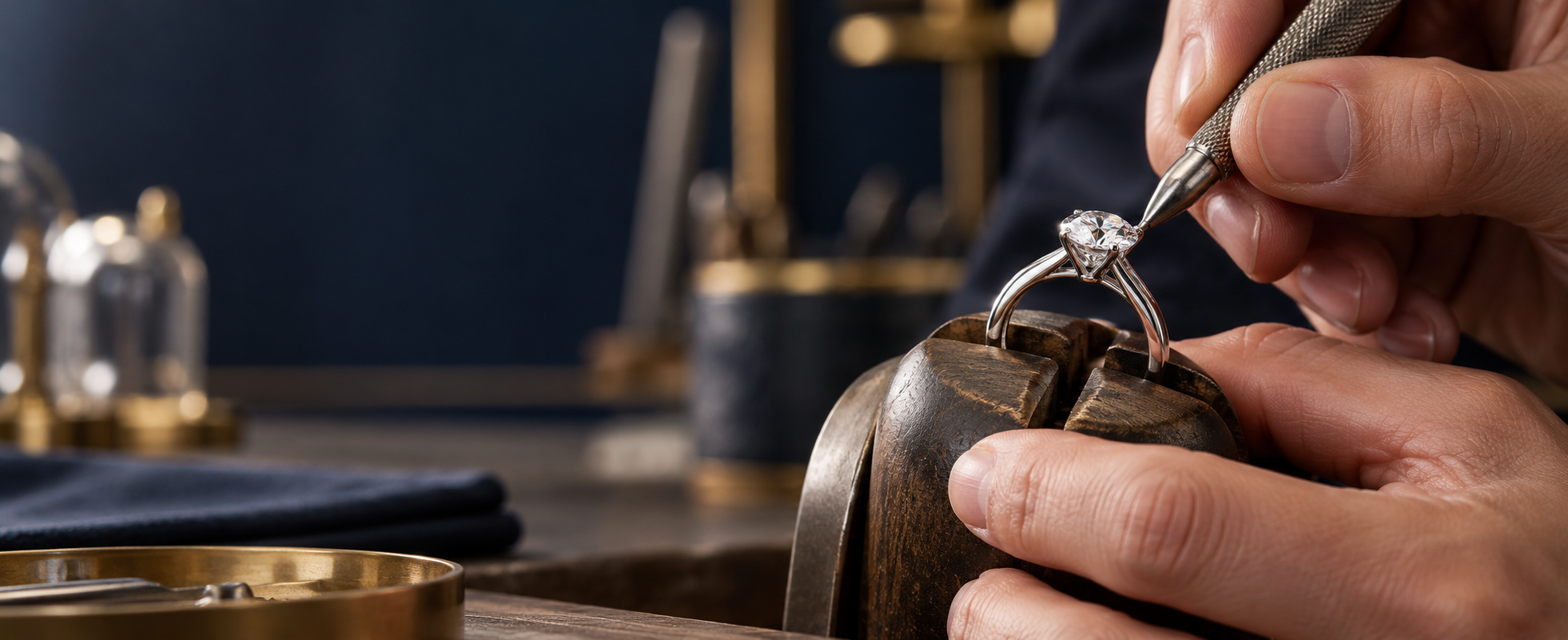
Precision craftsmanship
Good setting work is measured in details that are easy to overlook. The stone must sit correctly, the claws must be balanced and the finish should support the design without distracting from it.
Our approach
We examine the stone, current setting, surrounding metal and overall condition of the jewellery.
We consider appearance, stone shape, design proportions and how the piece will be worn.
The stone is aligned and secured with careful attention to balance, finish and structural integrity.
The setting and surrounding jewellery are checked before the piece receives its final finish.

Stone security
A loose or damaged setting should be inspected before the jewellery is worn again. Continuing to wear it may place the stone at risk.
Questions
Yes, the jewellery first needs to be assessed. We will examine the stone, claws, setting and surrounding metal before recommending the appropriate work.
Often, yes. What is possible depends on the stone, existing design, metal and condition of the piece. A consultation allows us to discuss suitable options.
Diamond setting can form part of a new custom design or remodelling project. The setting is considered alongside the overall design and proportions of the piece.
Timing depends on the setting style, condition of the jewellery and whether additional repair or manufacturing work is required. JRC will advise after assessing the piece.
No. Remove the ring and store it safely until the setting can be inspected. Wearing it may increase the risk of losing or damaging the stone.
Visit our Johannesburg or Cape Town team for careful guidance on setting, resetting and stone security.